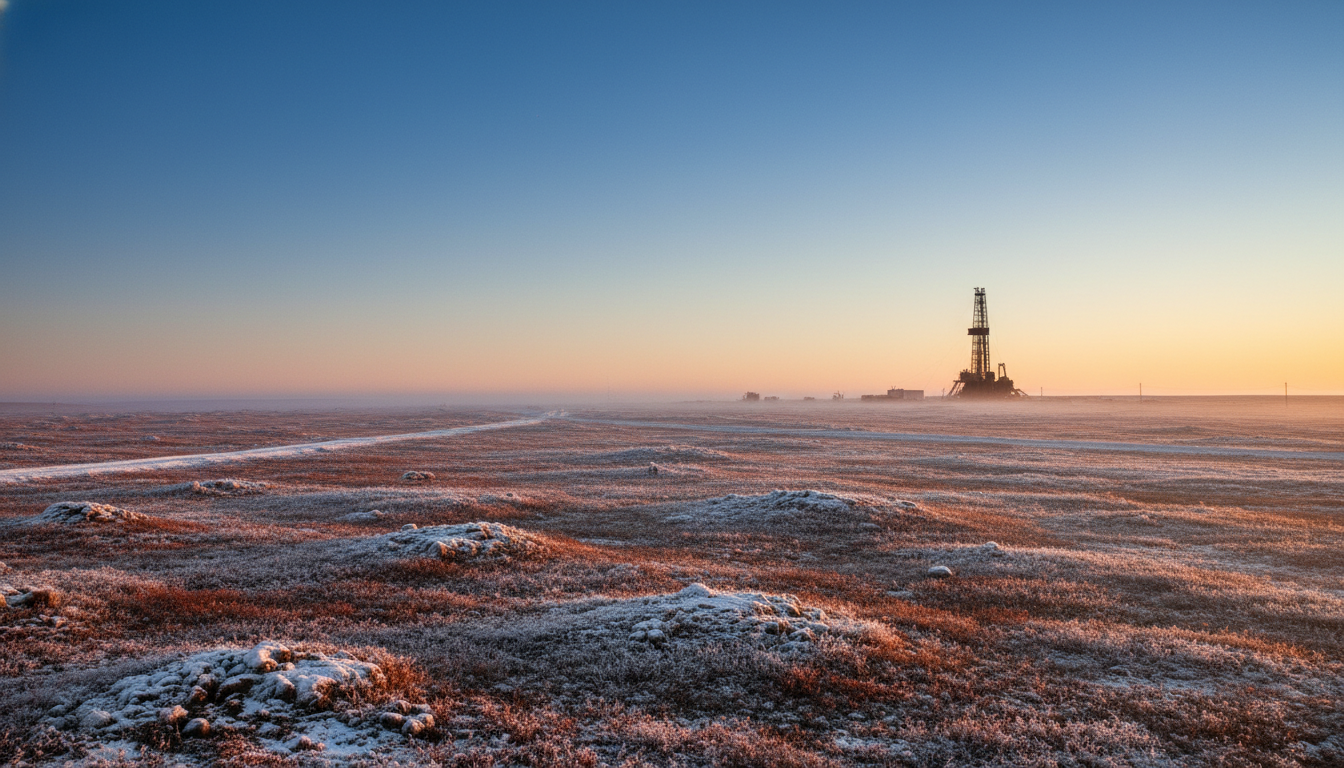
Arctic Refuge Auction: A High-Stakes Test for U.S. Oil Industry Appetite
After years of failed auctions and legal battles, the Trump administration's June 2026 lease sale will reveal if the industry still has the stomach for Arctic frontier exploration.
Christian Rosenblum
Managing Editor
Key Takeaways
- The June 5, 2026 auction is mandated by the OBBBA and covers roughly 690,000 acres.
- Recent record bidding in the NPR-A suggests renewed interest, but ANWR lacks critical infrastructure.
- Major U.S. and Canadian banks remain committed to policies against financing Arctic projects.
- Legal challenges from indigenous groups and environmentalists could tie up leases for years.
- Historically, ANWR auctions have significantly underperformed revenue expectations.
On June 5, 2026, the Bureau of Land Management (BLM) will conduct a lease sale in the Arctic National Wildlife Refuge (ANWR), a move that marks the latest chapter in one of the most contentious energy battles in American history. Mandated by the "One Big Beautiful Bill Act" (OBBBA), this auction is more than just a regulatory requirement; it is a litmus test for the actual market value of the refuge’s Coastal Plain—often called the "1002 Area."
The NPR-A Momentum vs. Arctic Skepticism
Coming off the back of a record-setting lease sale in the National Petroleum Reserve-Alaska (NPR-A) earlier this year, proponents of Arctic development are optimistic. In that sale, industry giants like ExxonMobil and Shell signaled a renewed willingness to commit capital to the North Slope. However, the 1002 Area is a different beast entirely. Unlike the NPR-A, which has existing infrastructure and a clearer regulatory pathway, ANWR is a "frontier" in the truest sense—completely devoid of roads, pipelines, or ports.
Critics point to the 2021 and 2025 auctions as a warning. The 2021 sale brought in a measly $16.5 million, less than 1% of the original $1.8 billion projection. The 2025 auction, held under the previous administration, resulted in zero bids. The question for investors is whether those failures were due to restrictive lease terms or a fundamental lack of economic viability in a world moving toward energy transition.
The Major Players: Who is Watching?
The usual suspects—ConocoPhillips and Hilcorp—remain the primary focus. Both companies have deep operational roots in Alaska and the specialized expertise required for Arctic exploration. However, the industry is also wary of "policy whiplash." Leases issued at the end of the first Trump term were suspended and later canceled, only to be resurrected now. This regulatory instability makes it difficult for major E&P firms to justify the decades-long capital commitment required for Arctic projects.
Furthermore, the Alaska Industrial Development and Export Authority (AIDEA) is expected to be present. Historically, AIDEA has stepped in to bid on leases when private industry hesitated, ensuring the land remains under state-supported development umbrellas despite federal opposition.
Litigation and the "Capital Wall"
Even if a company wins a lease on June 5, the path to production is paved with lawsuits. Organizations like Earthjustice and the Gwich’in Steering Committee have already filed challenges. For an oil major, a lease that is tied up in court for ten years is often a liability, not an asset.
Perhaps the largest hurdle, however, is financing. Most major U.S. and Canadian banks have internal policies prohibiting the financing of Arctic oil and gas projects. Without access to traditional capital markets, smaller independents are effectively barred from the auction, leaving only the most cash-rich majors or state-backed entities to participate.
The Investor Outlook
For accredited investors, the June 5 auction will provide a definitive answer on the industry's risk appetite. If the majors show up in force, it signals a belief that the 4.3 to 11.8 billion barrels of oil estimated to be in the refuge are worth the immense political and legal risk. If they stay home, it may be time to acknowledge that the biological heart of the Arctic has become an uninvestable asset class.
Source: Bureau of Land Management (BLM) Lease Sale Schedule 2026; Congressional Budget Office Revenue Projections for the 1002 Area.
Frequently Asked Questions
When is the ANWR lease sale taking place?
Why did previous ANWR auctions fail?
Who are the most likely bidders?
Christian Rosenblum
Managing Editor